
Every homeowner in metro Atlanta eventually asks the same question: which grass should actually go down in my yard? There is no single right answer, because Bermuda, Zoysia and Centipede solve different problems. What follows is the comparison we actually walk homeowners through on-site, not a marketing pitch for whichever grass happens to be cheapest to install that week.
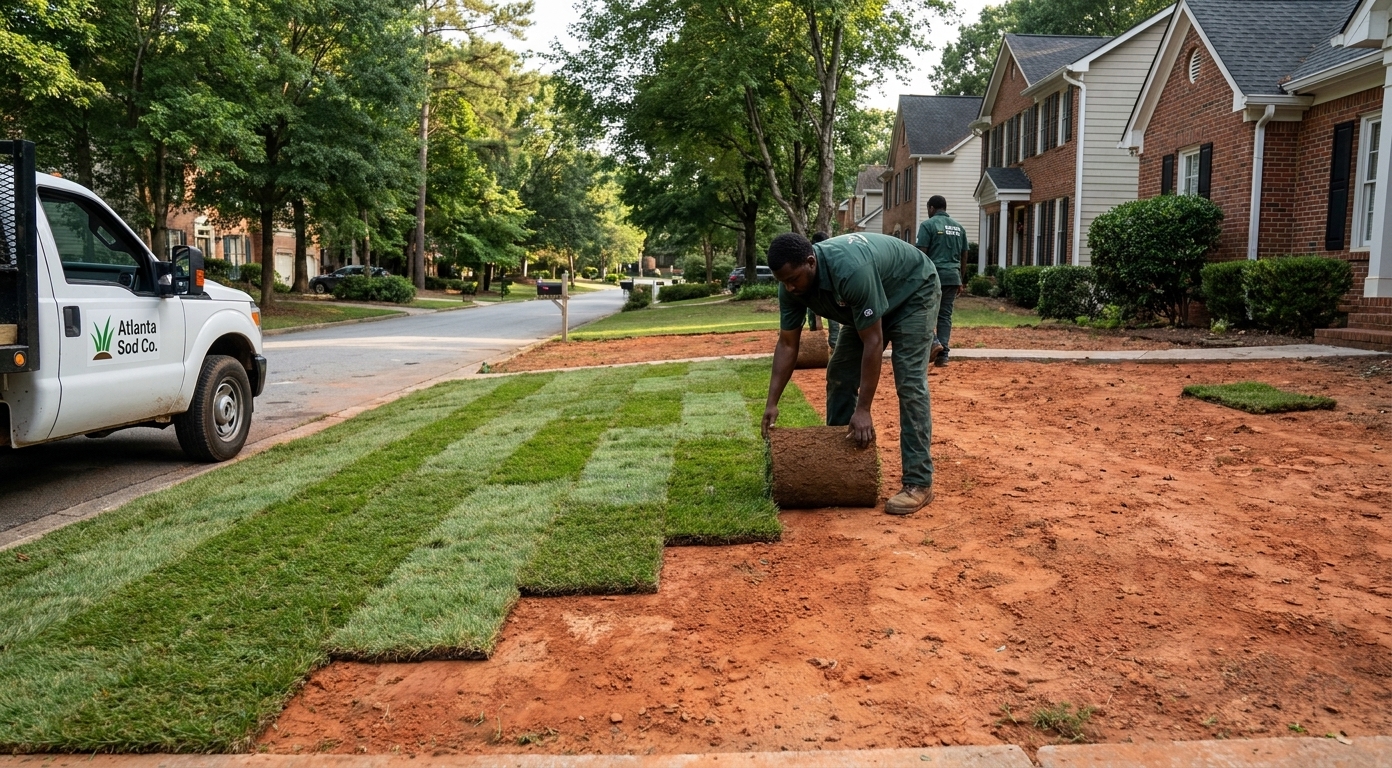
The short version
Bermuda is the toughest, fastest-establishing, full-sun grass and the least expensive to install — but it goes brown and dormant the moment temperatures drop and it hates shade. Zoysia gives you a dense, soft, manicured look with decent shade tolerance and holds its color longer into fall, at a real cost premium. Centipede is the low-maintenance, low-input choice that actually prefers Georgia’s naturally acidic clay instead of fighting it, but it establishes slowly and doesn’t take heavy foot traffic well.
Head-to-head comparison
| Trait | Bermuda | Zoysia | Centipede |
|---|---|---|---|
| Sun requirement | Full sun (6+ hrs) | Full sun to light shade | Full sun to partial shade |
| Shade tolerance | Poor | Moderate — best of the three | Fair, better than Bermuda |
| Heat & drought tolerance | Excellent | Very good | Good, but shallow-rooted |
| Wear tolerance (kids, pets, sports) | Excellent — self-repairs fast | Good, denser but slower to self-repair | Fair — not built for heavy traffic |
| Mowing frequency | Frequent (weekly in-season) | Moderate | Low — one of its biggest selling points |
| Mowing height | 0.5–1.5 in. | 1–2 in. | 1–1.5 in. |
| Installed cost per sq ft | $0.55 – $0.85 | $0.85 – $1.25 | $0.60 – $0.90 |
| Winter dormancy | Goes brown early, first frost | Goes brown, holds color longest of the three | Goes brown, similar timing to Bermuda |
| Preferred soil pH | 6.0–7.0 (often needs lime) | 6.0–6.5 (often needs lime) | 5.0–6.0 (matches Georgia clay as-is) |
| Establishment speed | Fast — rooted in 2–3 weeks | Slow — 3–4+ weeks | Slowest of the three |
Sun and shade tolerance
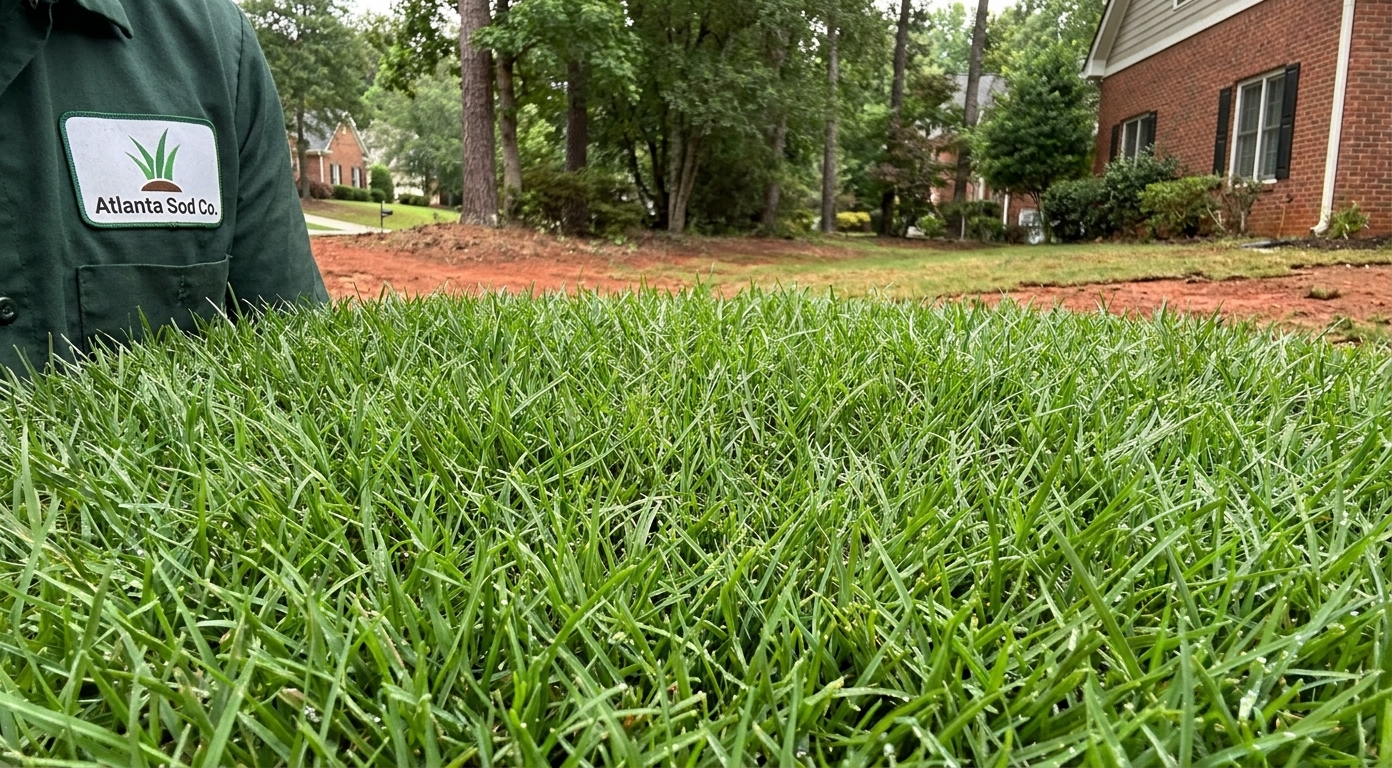
Bermuda needs six or more hours of direct sun to stay dense. Plant it under a mature oak canopy in an intown lot and it thins out within a season or two, no matter how well it’s watered. Zoysia is the most shade-tolerant of the three warm-season grasses commonly installed here, though “shade-tolerant” for a warm-season grass still means partial shade, not deep shade — no warm-season sod thrives under heavy year-round shade. Centipede sits in between: it handles a few hours less direct sun than Bermuda without complaint but isn’t a true shade grass either.
Heat, drought and wear tolerance
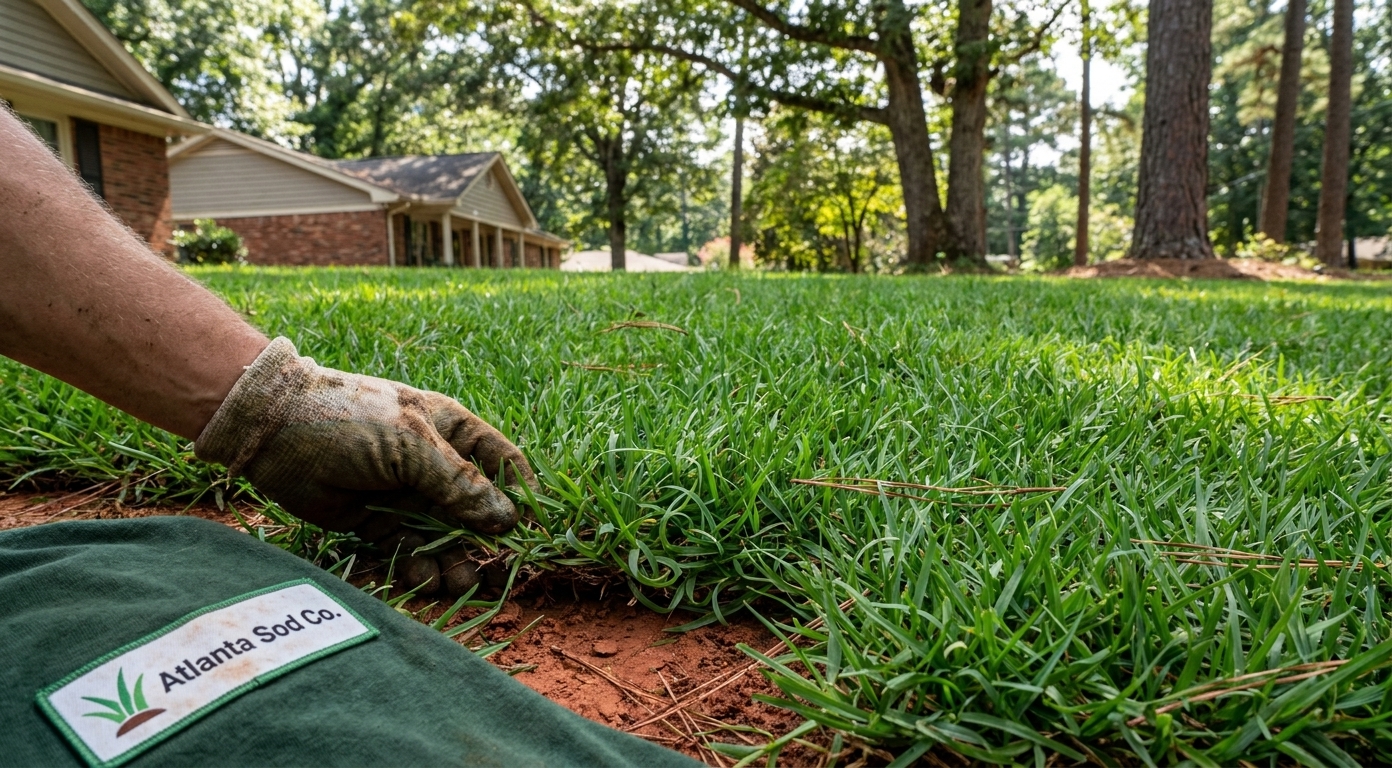
All three are warm-season grasses built for Georgia summers, but they don’t handle stress identically. Bermuda’s aggressive stolon-and-rhizome growth means it recovers from drought stress and physical wear the fastest of the three — it’s the standard choice for yards with kids, dogs, or a trampoline in constant use. Zoysia is dense enough to resist wear well but is slower to fill back in once damaged. Centipede has shallower roots than either and is more sensitive to drought stress in its first two summers; it’s a poor match for a yard that doubles as a soccer field.
Mowing frequency and height
If low-maintenance mowing is the priority, Centipede wins outright — it grows slowly enough that many homeowners mow every 10 to 14 days in peak season instead of weekly. Bermuda is the opposite: its speed and density are exactly what make it durable, and that same growth rate means it wants a weekly cut through the summer or it gets scalped-looking fast. Zoysia lands in the middle, typically every 7 to 10 days.
Cost per square foot
Bermuda is the least expensive to install in metro Atlanta, generally $0.55 to $0.85 per square foot. Zoysia runs $0.85 to $1.25 because it costs more to produce and grows more slowly at the sod farm. Centipede lands in between at $0.60 to $0.90. For the full breakdown of what moves those numbers on a real quote, see our guide on sod cost in Atlanta.
Winter dormancy behavior
Every warm-season grass in this comparison goes brown and dormant once soil temperatures drop, and none of them stay green through a Georgia winter the way a cool-season fescue lawn does. Bermuda tends to brown earliest at the first real frost. Zoysia typically holds color a couple of weeks longer into fall and greens up a bit earlier in spring. Centipede’s dormancy timing tracks closely with Bermuda’s.
Soil pH: the detail most homeowners never hear
This is where Centipede genuinely stands out. Georgia’s native Piedmont clay runs naturally acidic, typically in the 5.0 to 6.0 pH range. Centipede actually prefers that acidity and often needs zero lime amendment at all — one reason it’s sometimes called “lazy man’s grass.” Bermuda and Zoysia both prefer a closer-to-neutral 6.0 to 7.0 pH, which means a yard being converted to either one frequently needs a lime application to correct the native soil before or shortly after installation. Skipping that step doesn’t kill new sod outright, but it does hold back root development and color for the first year or more.
Establishment speed
Bermuda roots the fastest of the three, often resisting a gentle tug test within two to three weeks in good summer heat. Zoysia takes noticeably longer, generally three to four-plus weeks, because its rhizome growth is slower by nature. Centipede is the slowest to fully establish and is also the grass most likely to still look a little rough at the one-month mark even when it’s rooting properly underneath — patience matters more with Centipede than either of the other two.
Winter overseeding: does it change the comparison?
Some homeowners overseed a warm-season lawn with annual ryegrass in fall to keep some green color through winter dormancy. That’s a separate maintenance decision from which base grass you choose, but it’s worth knowing Bermuda is the easiest of the three to overseed successfully — its dense, uniform surface takes ryegrass evenly. Zoysia can be overseeded but the denser thatch layer makes germination slightly less consistent. Centipede is rarely overseeded in practice; its slower spring green-up means overseeded ryegrass can compete with and delay Centipede’s own recovery coming out of dormancy.
Long-term maintenance cost differences
The sticker price at installation is only part of the cost picture. Bermuda’s fast growth means more frequent mowing over a season, which adds up in fuel, time or lawn-service fees even though the grass itself was the cheapest to install. Centipede flips that: the lowest install cost of a middle-ground grass and the lowest ongoing mowing and fertilizer needs of the three, since it’s bred specifically to thrive on minimal input. Zoysia sits at the other end — higher install cost and moderate mowing, but it also tends to need less fertilizer than Bermuda once established, since its dense growth habit crowds out competing weeds and reduces how much feeding it takes to look full.
A few common myths worth clearing up
- “Zoysia is a shade grass.” It’s more shade-tolerant than Bermuda or Centipede, but it’s still a warm-season grass that wants meaningful sun. True shade areas need a different landscaping solution entirely, not just a switch to Zoysia.
- “Centipede is maintenance-free.” It’s lower-maintenance, not no-maintenance. It still needs correct mowing height, proper watering during establishment, and it’s actually more sensitive to over-fertilizing and over-liming than the other two, since both push its pH away from what it wants.
- “Bermuda will take over any flower bed eventually.” It spreads aggressively and does need a physical edge or barrier maintained along beds, but this is manageable with routine edging rather than a reason to avoid the grass entirely on a typical residential lot.
Which grass fits your yard?
- Full-sun new-construction yard, no mature trees: Bermuda. Fast establishment, lowest cost, and there’s no shade problem to plan around.
- Shaded older intown lot with mature trees: Zoysia, and only in the areas that still get a reasonable amount of light. No warm-season grass, Zoysia included, will hold up under a dense year-round canopy — that’s a conversation about which beds should become mulch or shade-tolerant groundcover instead of lawn.
- Budget-conscious, low-maintenance yard: Centipede, especially on a larger lot where mowing time matters and the soil is already acidic clay that would otherwise need lime for another grass.
- High-traffic yard with kids and dogs: Bermuda, without much competition. Its self-repair speed is the deciding factor once a yard sees daily heavy use.
What we’d tell you on-site
Most yards in metro Atlanta aren’t purely one condition or the other — a front yard in full sun and a shadier side yard under a tree canopy often call for different grasses on the same property, or a compromise pick that handles both reasonably well. We measure sun exposure at the actual site, check what the existing soil pH looks like, and give you a straight recommendation rather than pushing whichever grass happens to be sitting on the truck.