
The short answer is roughly April through September, with early October still workable in most years. The longer answer depends on why you’re asking — a homeowner planning a DIY weekend and a crew installing sod for a living think about that window differently, and it’s worth understanding why before you pick a date.
Why warm-season grass runs on a different calendar than fescue
Metro Atlanta sits in the transition zone, and most of what we install — Bermuda, Zoysia and Centipede — is warm-season grass. Warm-season turf actively grows and puts down new roots when soil temperatures are warm, roughly from mid-spring through early fall, then goes dormant and stops growing once soil cools in late fall and winter. That’s the opposite growth pattern from cool-season fescue, which actually prefers to be seeded or sodded in cooler fall weather. If you’ve seen planting-calendar advice online telling you fall is the best time to seed a lawn, that advice is almost always written for cool-season fescue lawns up north, not for the Bermuda, Zoysia or Centipede that make up the vast majority of Atlanta-area sod installs.
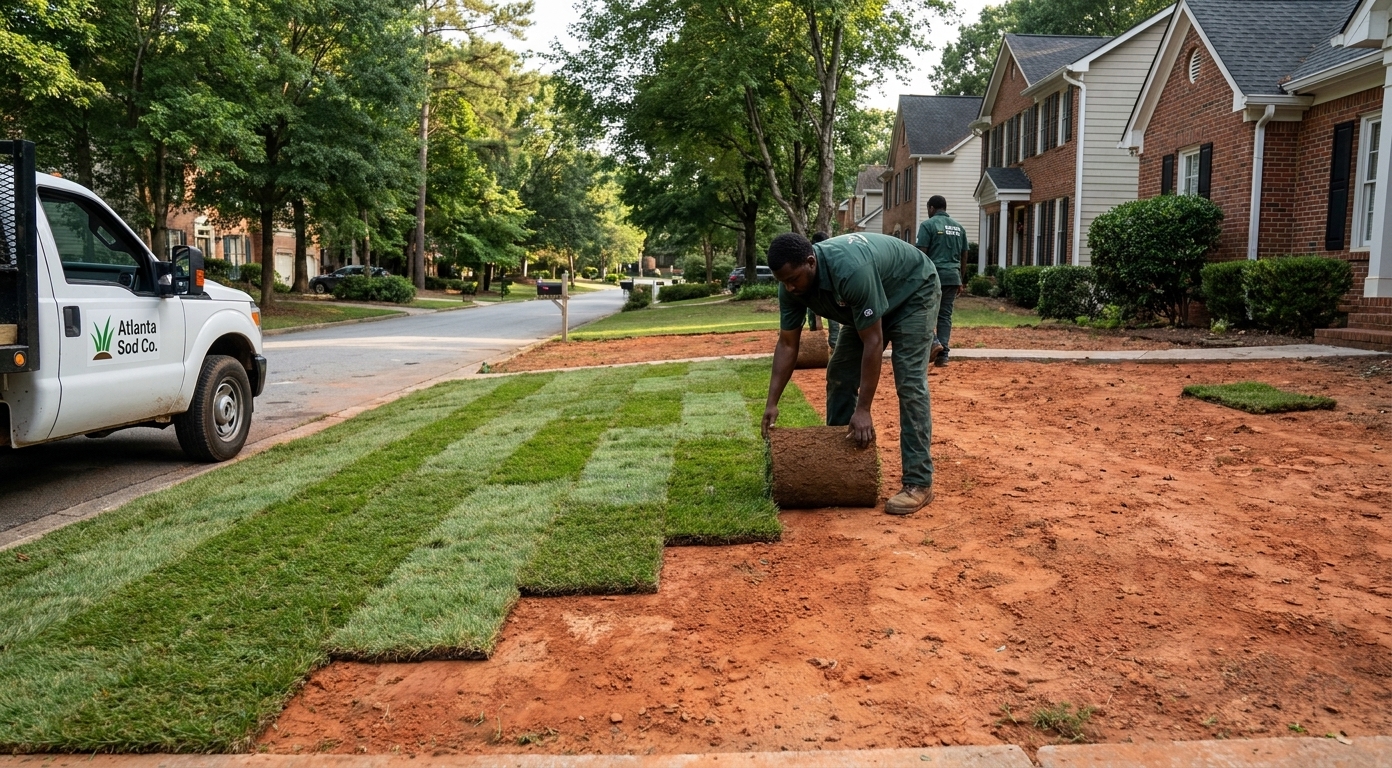
The ideal window: April through September
| Window | What’s happening |
|---|---|
| April – May | Soil is warming, grass is coming out of dormancy and actively rooting. Excellent install window. |
| June – August | Peak growth, fastest rooting of the year — but also peak heat, so watering discipline matters most here. |
| September – early October | Soil is still warm, growth is slowing but roots still establish reliably with a bit more runway before frost. |
| Late October – March | Soil is cool to cold and grass is dormant or heading into dormancy. Installs are riskier and rooting is slow to none. |
Inside that April-through-September window, sod gets the two things it needs most to root well: warm soil and active growth hormones telling the plant to put down new roots rather than sit still. Outside that window, the grass is either not growing yet or shutting down for the season, and neither condition is friendly to a fresh install.
The risk of a dead-of-winter install
Sod laid in December or January in metro Atlanta isn’t actively rooting into the soil beneath it — it’s essentially sitting in place, dormant, waiting for spring. That leaves it far more vulnerable during that stretch: a hard freeze, a dry cold snap, or foot traffic across unrooted turf can all cause real damage before the plant ever gets a chance to anchor itself. Some sod survives a winter install fine, but it’s a gamble with no real upside — there is no cost or availability advantage to installing warm-season sod in winter that offsets the added risk.
The risk of installing right before a heat wave with no irrigation plan
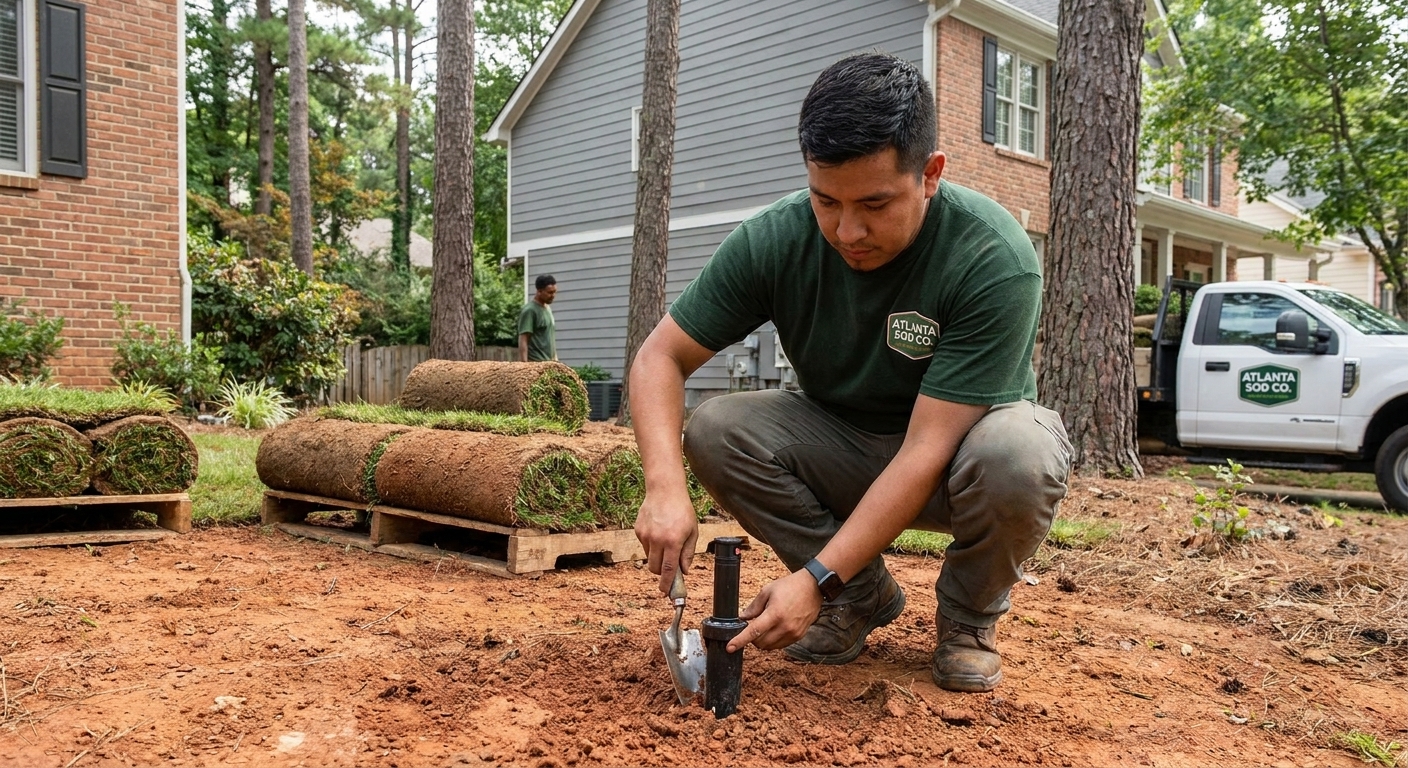
The opposite mistake is just as common: installing sod right as a stretch of 95-degree days hits, without a real plan for keeping it watered twice a day. New sod has almost no root system for the first week or two, which means it can only pull moisture from the top inch or so of soil. In a heat wave, that top inch dries out fast — sometimes within hours on a hot afternoon. Skipped or late watering during that window is the single most common reason a fresh install shows yellow, crispy patches within the first ten days, and it has nothing to do with the sod itself.
None of this means summer installs should be avoided — June through August is actually peak rooting speed for warm-season grass. It means a summer install without a watering plan, whether that’s an irrigation system or a homeowner committed to being home twice a day, is asking for trouble. See our guide on caring for new sod the first 30 days for the exact watering schedule.
Does the ideal window shift by grass type?
Not dramatically. Bermuda, Zoysia and Centipede are all warm-season grasses and share roughly the same core window, though there are minor differences worth knowing. Bermuda roots fastest of the three and has the widest safe margin on either end of the window, since it’s the most aggressive grower. Zoysia and Centipede establish more slowly, which means pushing either one right up against the early-spring or late-fall edges of the window carries a bit more risk than doing the same with Bermuda — there’s simply less time left in the growing season for a slower-establishing grass to root before dormancy sets in.
What if you have no choice but to install outside the window?
Sometimes timing isn’t flexible — a home sale closing, a renovation wrapping up in November, or a yard that’s been bare dirt all winter and can’t wait until spring. If that’s your situation, a few things help manage the added risk: choosing the warmest, most sheltered stretch available rather than the coldest week of the month, watering on whatever schedule the temperature allows without letting the ground freeze around wet roots, and setting expectations that green-up may not be visible until the following spring even if the sod itself survives the winter intact. This is also where talking to an installer before ordering material pays off — sometimes a two-week shift in either direction meaningfully changes the outlook.
Microclimate differences within metro Atlanta
Soil temperature doesn’t hit every part of the metro on exactly the same schedule. Intown neighborhoods with more pavement and less tree canopy tend to warm up slightly earlier in spring than shaded, wooded lots further out, thanks to the urban heat-island effect. North-metro communities at slightly higher elevation can run a touch cooler and see soil warm a few days to a week later than close-in areas. None of this changes the broad April-through-September guidance, but it’s part of why we check actual site conditions rather than applying a single calendar date to every yard we quote.
Preparing for an install regardless of season
Whatever month you land on, the ground itself still needs to be ready. Grading, old-lawn removal, soil testing and an irrigation check matter just as much in June as they do in October — timing gets sod off to a good start, but it can’t make up for a yard that wasn’t prepped properly underneath. See our full guide on prepping a lawn before sod installation for the complete checklist.
Professional installers vs. DIY: how much the window actually flexes
A professional crew can sometimes push an install a few weeks outside the ideal window with adjustments a DIY homeowner usually can’t match — running temporary irrigation on a schedule most people won’t stick to by hand, choosing a slightly later cut of sod with more stored energy for a marginal-season install, or simply reading soil temperature and site drainage more accurately than a general online planting calendar can. That flexibility has limits; nobody can make a hard-frozen January lawn root well. But it’s the difference between a professional install in early October holding up fine and a DIY install on the same date struggling, because the margin for error is thinner outside the core window and professional attention closes some of that gap.
What we actually recommend
For most metro Atlanta yards, we steer homeowners toward late April through mid-September, with early fall as a solid secondary option if a spring or summer date doesn’t work with your schedule. If you’re set on a date outside that range, talk to us before ordering material — sometimes a two- or three-week shift makes a meaningful difference in how reliably the sod roots. Full installation details live on our sod installation page.