Service · Atlanta, GA
Bermuda Sod Installation in Atlanta
The standard warm-season turf for full-sun Georgia lawns — heat- and drought-tolerant, fast to fill in, and built to take real foot traffic from kids, pets and sports.
Why Bermuda is the default sod for Atlanta yards
Bermuda is the most commonly installed warm-season turf across metro Atlanta, and the reason is simple: nothing else handles Georgia’s summer heat and drought stretches as well while still filling in fast enough to recover from heavy foot traffic. For a full-sun front yard, a sports lawn, or any yard with active kids and dogs, Bermuda is usually the right default before we even talk about the alternatives. See our full sod installation page for the general install process; this page covers what makes Bermuda specifically worth knowing before you commit to it.
Full sun is a hard requirement, not a preference
Bermuda needs six or more hours of direct sun a day to hold up, and it does not compromise well on this. In real shade — under a mature tree canopy, along a north-facing fence line, behind a two-story addition — Bermuda thins out, gets stringy, and eventually loses the fight to weeds no matter how well it is fertilized or watered. If more than a section of your yard sits in consistent shade, Bermuda is the wrong choice for that area. Zoysia sod installation handles moderate shade noticeably better while keeping a similarly manicured look, and Centipede sod installation is worth a look too, though it is not a strong shade performer either. We will tell you honestly if your yard is a bad fit for Bermuda rather than install it anyway and let it fail.
Hybrid varieties used across metro Atlanta
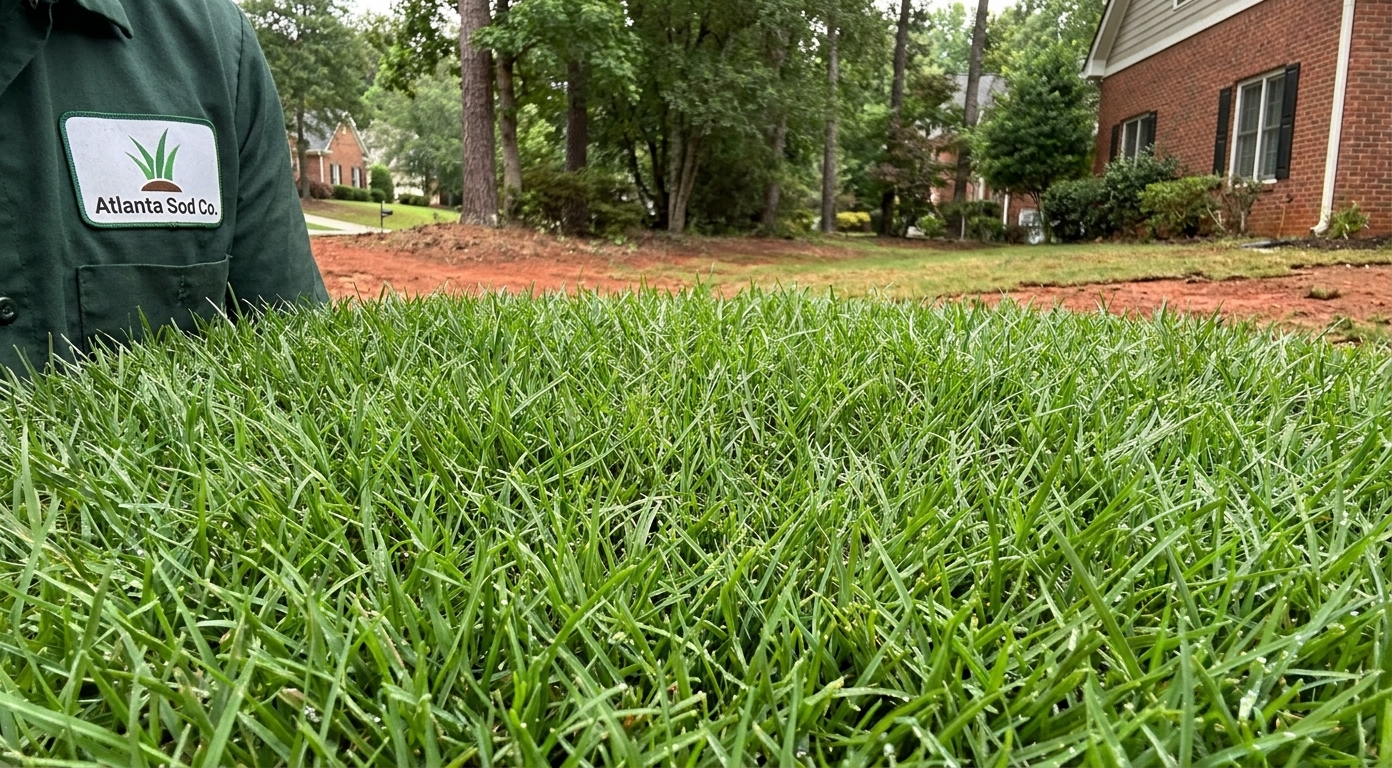
Most Bermuda sod installed in the metro today is a hybrid cultivar, not common Bermuda seed-grown turf. Tifway 419 has been the workhorse hybrid for decades — dense, fine-bladed and durable. TifTuf is a newer cultivar bred for better drought tolerance and faster establishment, and it has become a popular upgrade pick for homeowners who want the Bermuda look with less watering stress during a dry August. Latitude 36 is another hybrid sometimes available regionally, bred with better cold tolerance for areas that see harder winters than deep-south Bermuda zones. Availability varies by what regional sod farms have cut that week; we will tell you which cultivar we are sourcing before it goes on the truck.
Winter dormancy is normal, not dead grass
Bermuda goes fully dormant after the first hard frost, usually sometime in November for metro Atlanta, and turns straw-brown for the winter. This is completely normal and not a sign of a failed install or a dying lawn — it is how Bermuda survives cold weather. It greens back up on its own once soil temperatures warm in spring, typically April, sometimes earlier in a mild year. New Bermuda sod installed in fall will look strange going dormant almost right after installation; this is expected, and the lawn will green up normally come spring.
Mowing Bermuda
- Fast growth rate means mowing every five to seven days during peak summer, more often than Zoysia or Centipede need.
- Cut height runs lower than the other two turf types, typically around 1 to 1.5 inches for a tight, manicured look, up to 2 inches if you prefer a slightly less aggressive cut.
- Never cut more than about a third of the blade height at once — scalping stressed Bermuda in peak heat invites disease and weed pressure.
- A sharp mower blade matters more with Bermuda than most turf; a dull blade tears rather than cuts and leaves a ragged, browning tip.
Wear tolerance for kids, pets and sports
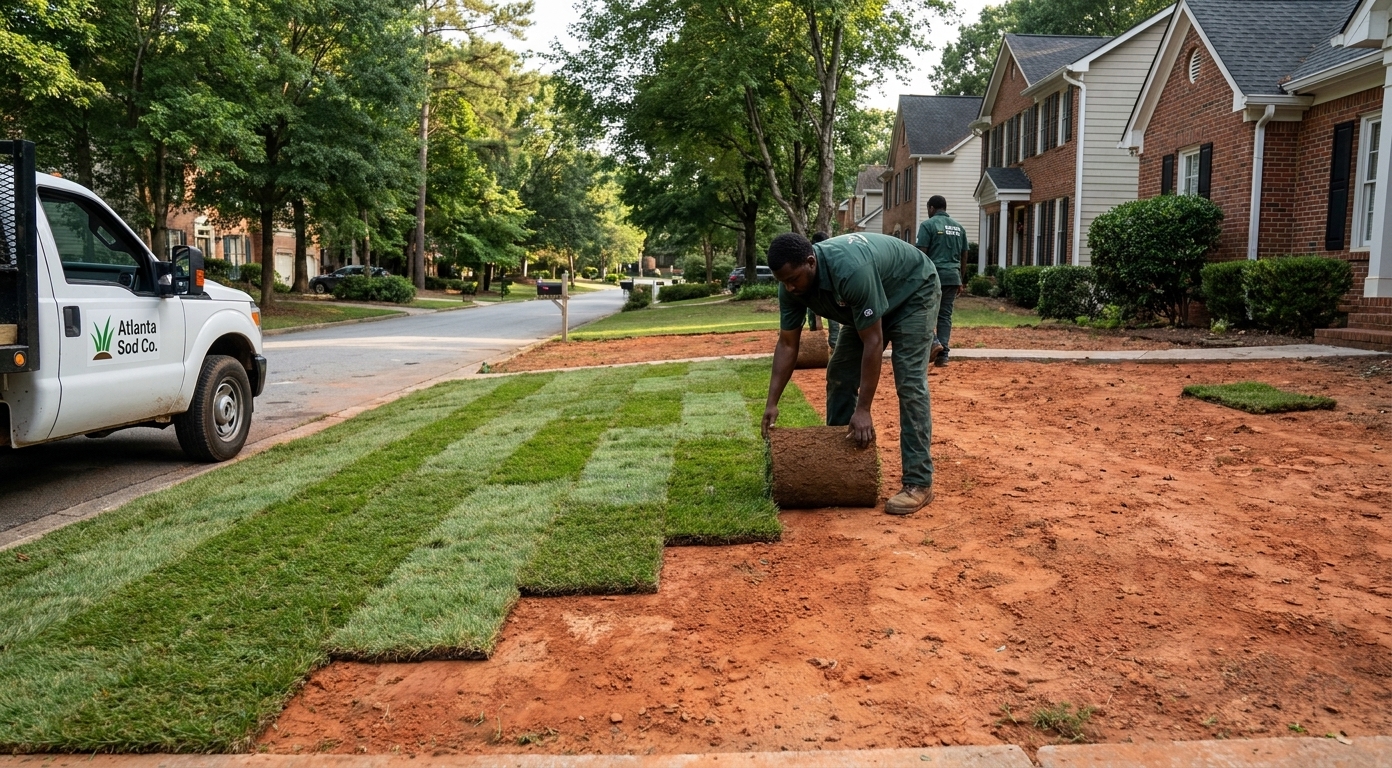
This is where Bermuda earns its reputation. It is the standard turf for athletic fields for a reason — it recovers from foot traffic, dog paths and general rough use faster than Zoysia or Centipede because of how aggressively it spreads by both rhizomes and stolons. A backyard that takes daily use from kids and a dog holds up noticeably better with Bermuda than either alternative, as long as it is getting the full sun it needs.
What Bermuda sod installation costs
Installed Bermuda runs $0.55 to $0.85 per square foot, generally the least expensive of the three turf types to install because the sod itself costs less per pallet than Zoysia and establishes fast enough to keep labor time down. One pallet covers roughly 500 square feet.
| Job | Typical range | What moves the price |
|---|---|---|
| Bermuda, installed | $0.55 – $0.85/sq ft | Yard size and prep condition |
| Pallet installed (~500 sq ft) | $275 – $425 | Access and delivery distance |
| Bermuda pallet, delivery only | $130 – $170 | Order size and distance |
| Old lawn removal & haul-away | $0.15 – $0.30/sq ft | Grass density and disposal distance |
Bermuda vs. the alternatives
If your yard gets full sun and sees real foot traffic, Bermuda is the right call. If a meaningful part of the yard sits in shade, or you want a softer, denser blade and do not mind paying more and mowing less, look at Zoysia sod installation instead. If your soil is naturally acidic clay and you want the lowest-maintenance option and do not need heavy wear tolerance, Centipede sod installation is worth comparing. If your yard needs grading or old-lawn removal before any sod goes down, start with lawn prep & grading.
Where we install Bermuda sod
We install Bermuda sod throughout metro Atlanta, including Decatur, Marietta, Smyrna, Kennesaw and Alpharetta, among other communities across our service area.
Questions
Bermuda Sod Installation FAQs
Installed Bermuda runs $0.55 to $0.85 per square foot, generally the least expensive of the three warm-season turf types we install. A typical 5,000 square foot yard runs $2,750 to $4,250 depending on prep needed and access. We give a flat written price after walking the yard.
Not well. Bermuda needs six or more hours of direct sun daily and thins out badly in real shade, no matter how it is fertilized or watered. If part of your yard sits under tree canopy or building shade, that section is a better fit for Zoysia or, in some cases, Centipede.
That is normal dormancy, not a dead lawn. Bermuda goes dormant and turns straw-brown after the first hard frost, usually in November for metro Atlanta, and greens back up on its own once soil warms in spring, typically April. New sod installed in fall will follow the same pattern.
Most commonly Tifway 419, a long-standing hybrid known for density and durability, or TifTuf, a newer cultivar bred for stronger drought tolerance and faster establishment. Availability depends on what regional sod farms have cut that week; we confirm the cultivar with you before ordering.
More often than Zoysia or Centipede — every five to seven days during peak summer growth. Cut height typically runs 1 to 1.5 inches for a tight look, up to 2 inches for a slightly less aggressive cut. Avoid removing more than a third of the blade height in a single mow.
Yes, it is one of the main reasons homeowners choose it. Bermuda recovers from foot traffic and wear paths faster than Zoysia or Centipede because it spreads aggressively by both rhizomes and stolons, which is also why it is the standard turf on athletic fields.
One pallet of Bermuda covers roughly 500 square feet. We measure your yard during the estimate and order pallets to match plus a small overage for cuts around beds and curves.
Yes, our Bermuda installs carry a one-year sod establishment warranty covering sod that fails to root due to installation error, not sod that fails from a homeowner skipping the watering schedule or planting it in a shaded area we flagged as unsuitable.
No, existing grass needs to be killed off or removed first so it does not compete with the new sod’s roots. See lawn prep & grading, or full lawn renovation if the existing lawn is extensively damaged, for how that step works.
Related
Other sod work we do
Get a price for your Bermuda sod installation
Free on-site estimate with a flat written price before we start. Call or send photos and we will tell you what it costs.
Mon–Sat 7:00am–7:00pm · Licensed & insured · Serving Atlanta and metro Atlanta