Service · Atlanta, GA
Centipede Sod Installation in Atlanta
The low-maintenance, budget-friendly turf built for Georgia’s naturally acidic clay — the “lazy man’s grass” that needs the least mowing and feeding of the three warm-season options we install.
The turf bred for Georgia’s soil, not fighting against it
Centipede is a genuinely different pick from Bermuda and Zoysia, and not just on price. It was bred for and thrives in naturally acidic, low-fertility soil, which describes most of the Piedmont red clay under metro Atlanta lawns. Where Bermuda and Zoysia often need regular lime applications to correct soil pH, Centipede generally does not — it prefers the acidic conditions Georgia soil already provides. See our general sod installation page for how the install process itself works; this page covers what makes Centipede specifically worth considering.
Why it is called “lazy man’s grass”
Centipede earned its nickname honestly. It grows slowly, needs far less fertilizer than Bermuda or Zoysia (in fact, over-fertilizing Centipede is a common way to damage it), and gets by on less frequent mowing. For a homeowner who wants a lawn that looks decent without a weekly maintenance routine, Centipede is usually the most realistic low-effort option among the three warm-season turf types we install.
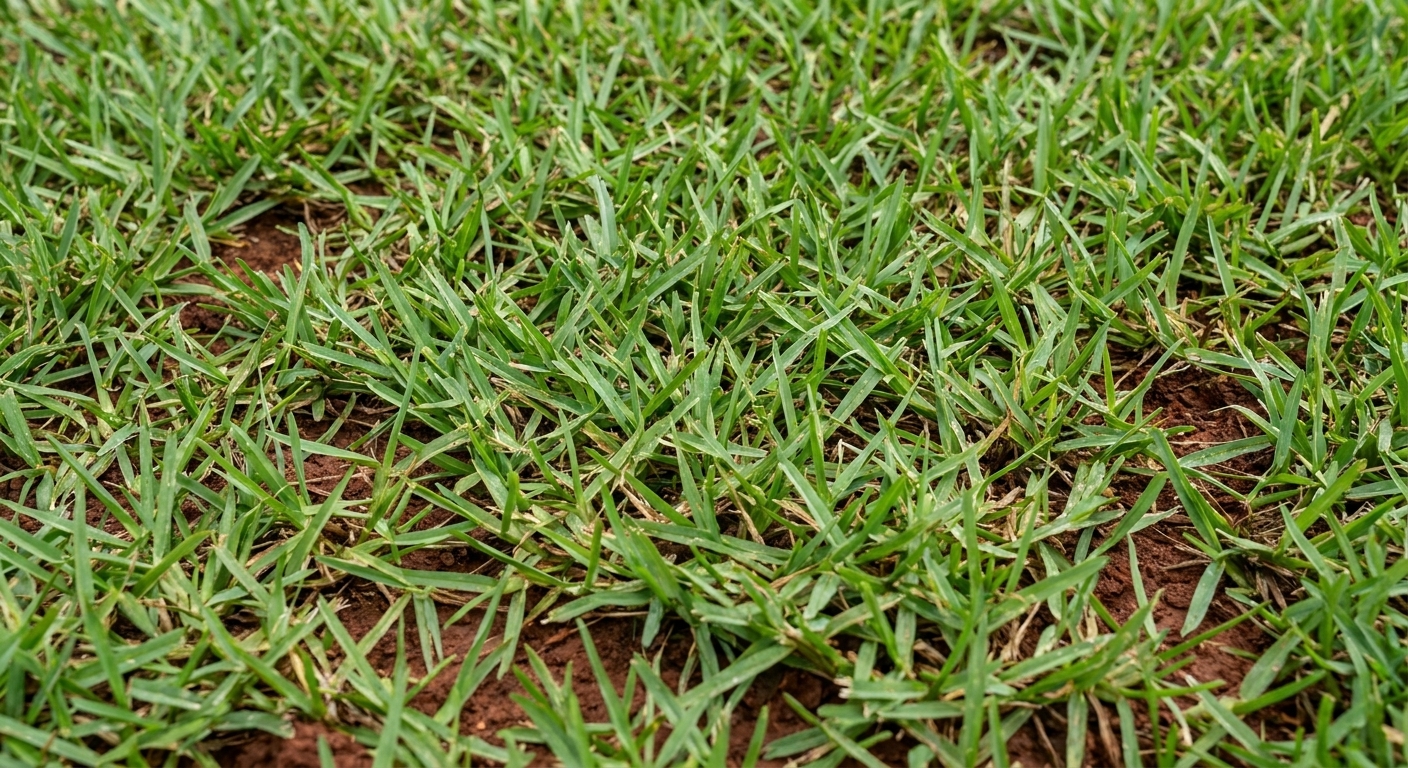
Apple-green color is normal, not a defect
New Centipede owners sometimes call us thinking something is wrong because the lawn is a lighter, more yellow-green shade than the deep green of a Bermuda or Zoysia lawn next door. That lighter apple-green color is simply the natural color of Centipede grass, not a sign of nutrient deficiency or disease. Some homeowners prefer the look; others need to know ahead of time so it does not read as a problem once it is installed.
Slower establishment than Bermuda
Centipede spreads more slowly than Bermuda and takes longer to fully fill in and knit together after installation. Expect a longer establishment window and be patient with bare-looking seams in the first few weeks — they close, just more slowly than a Bermuda lawn on the same timeline. This is also why weed control matters more with a new Centipede install; slower fill-in gives weeds more of a window to establish in open seams.
Thin wear tolerance — not the pick for heavy traffic
This is Centipede’s real tradeoff. It does not recover from heavy foot traffic the way Bermuda does, and repeated wear from active kids, large dogs or regular equipment traffic across the same path will thin it out faster than it can regrow. For a yard that gets that kind of daily use, Bermuda sod installation is the better fit. Centipede works best for a lawn that is looked at more than it is played on hard.
TifBlair and cold hardiness
TifBlair is the most common improved Centipede cultivar installed regionally, bred specifically for better cold tolerance than older Centipede varieties. Cold hardiness matters more for Centipede than for Bermuda or Zoysia, since Centipede is generally more sensitive to hard winter damage; TifBlair narrows that gap and is the variety we recommend for most metro Atlanta yards.
Watering and mowing a new Centipede lawn
New Centipede sod follows the same early watering routine as any fresh install — twice-daily watering for the first seven to ten days to keep the top inch of soil consistently damp, then once daily for another week before easing into a normal schedule. Because it establishes more slowly than Bermuda, give it a bit more patience before mowing for the first time or resuming regular foot traffic across it.
Once established, Centipede is typically mowed at a slightly higher height than Bermuda, generally 1.5 to 2 inches, and needs mowing far less often thanks to its slow growth rate — often every two to three weeks during peak season rather than weekly. This is one of the main reasons homeowners choose it for a lawn they do not want to spend much time maintaining.
Soil pH and testing
Because Centipede is specifically suited to acidic soil, a simple soil pH test before installation is worth doing if you are unsure what your yard’s current soil chemistry looks like, especially if the yard previously grew Bermuda or Zoysia and had lime applied regularly. Soil that has been limed for years to support a different turf type may sit at a pH that is less ideal for Centipede than untreated Georgia clay would be. We can pull a quick test as part of a lawn prep & grading visit before committing to Centipede if that history is unclear.
Centipede vs. Bermuda vs. Zoysia
- Choose Centipede for the lowest-maintenance, most budget-friendly lawn on acidic clay soil, if heavy wear tolerance is not a priority.
- Choose Bermuda for full-sun yards with heavy foot traffic from kids, pets or sports.
- Choose Zoysia for the most manicured look with better shade tolerance, if you are willing to pay more and mow slightly more.
What Centipede sod installation costs
Installed Centipede runs $0.60 to $0.90 per square foot, in between Bermuda and Zoysia. One pallet covers roughly 500 square feet, similar to Bermuda.
| Job | Typical range | What moves the price |
|---|---|---|
| Centipede, installed | $0.60 – $0.90/sq ft | Yard size and access |
| Pallet installed (~500 sq ft) | $300 – $450 | Access and delivery distance |
| Centipede pallet, delivery only | $140 – $180 | Order size and distance |
| Old lawn removal & haul-away | $0.15 – $0.30/sq ft | Grass density and disposal distance |
Where we install Centipede sod
We install Centipede sod throughout metro Atlanta, including Marietta, Smyrna, Vinings, Peachtree Corners and Chamblee, among other communities across our service area. If your soil needs testing or amendment before sod goes down, start with lawn prep & grading.
Questions
Centipede Sod Installation FAQs
Installed Centipede runs $0.60 to $0.90 per square foot, in between Bermuda and Zoysia. A typical 5,000 square foot yard runs $3,000 to $4,500 depending on prep needed and access.
Because it needs less fertilizer, less mowing and less overall maintenance than Bermuda or Zoysia once established. It grows slowly and does not tolerate over-fertilizing well, which actually works in its favor for homeowners who do not want a demanding lawn.
Yes. Centipede has a naturally lighter, apple-green color compared to the deeper green of Bermuda or Zoysia. It is the normal color for the variety, not a sign of a nutrient deficiency or a problem with the install.
Generally no. Centipede was bred for and prefers naturally acidic soil, which describes most of the clay soil across metro Atlanta, so it typically needs little to no lime correction, unlike Bermuda and Zoysia which often benefit from it.
Not as good as Bermuda. Centipede has thinner wear tolerance and does not recover from heavy foot traffic as quickly. For a yard that gets daily heavy use, Bermuda sod installation is usually the better fit.
Longer than Bermuda. Centipede spreads more slowly and takes more time to fully knit its seams together and fill in. Expect a longer patience window before the lawn looks fully filled-in compared to a Bermuda install on the same yard.
Most commonly TifBlair, an improved cultivar bred for better cold hardiness than older Centipede varieties, which matters more for Centipede than for Bermuda or Zoysia since it is generally more cold-sensitive.
One pallet of Centipede covers roughly 500 square feet, similar to Bermuda. We measure your yard during the estimate and order pallets to match plus a small overage.
Yes, our Centipede installs carry a one-year sod establishment warranty covering sod that fails to root due to installation error, not sod damaged by over-fertilizing or heavy traffic beyond what the turf type reasonably tolerates.
Related
Other sod work we do
Get a price for your Centipede sod installation
Free on-site estimate with a flat written price before we start. Call or send photos and we will tell you what it costs.
Mon–Sat 7:00am–7:00pm · Licensed & insured · Serving Atlanta and metro Atlanta