
Seed is cheaper up front, and that’s usually the first thing homeowners hear about it. What gets left out of that pitch is how differently seed performs depending on the grass, and for the warm-season turf that makes up nearly every lawn in metro Atlanta, seed comes with real limitations sod simply doesn’t have.
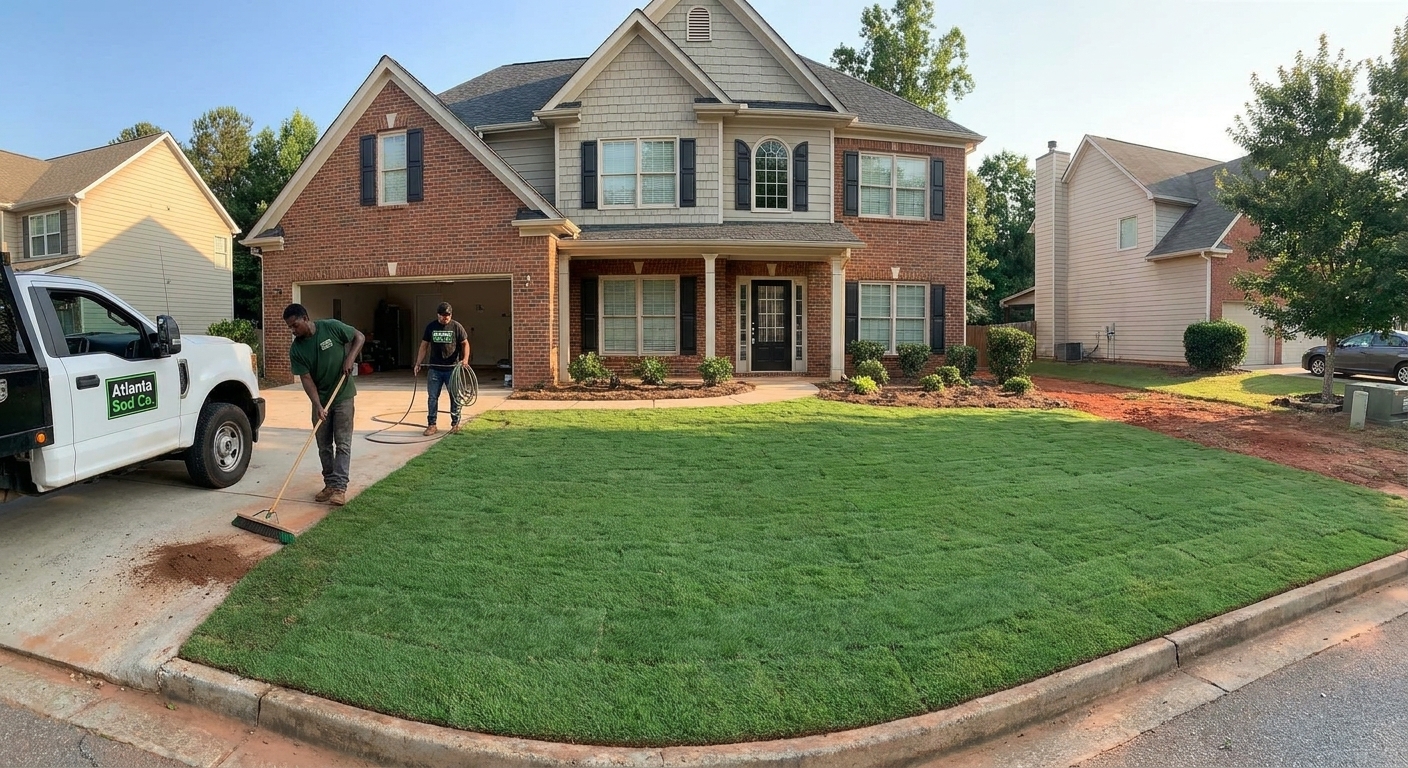
Why warm-season grass is usually sodded, not seeded
Bermuda, Zoysia and Centipede — the three grasses that make up the overwhelming majority of Atlanta-area lawns — spread primarily by stolons and rhizomes, the above- and below-ground runners that let established turf fill in bare spots and knit together into a solid lawn. That’s a different growth strategy than cool-season fescue, which spreads and fills in fairly reliably from seed. Warm-season seed exists, but it germinates unevenly, and getting a seeded warm-season lawn to full density can take a full growing season or more rather than weeks.
During that long fill-in period, a seeded lawn is vulnerable the entire time — to weeds moving into the bare and thin patches before the grass can outcompete them, and to erosion on any slope or during heavy Georgia rain before the root system is established enough to hold soil in place. Sod skips that vulnerable window almost entirely: it arrives already dense, already rooted turf, and it’s doing the job of holding soil and shading out weeds from the day it’s laid.
Sod vs. seed at a glance
| Factor | Sod | Seed |
|---|---|---|
| Time to a usable lawn | Days to a few weeks | One full growing season or more, for warm-season grass |
| Weed vulnerability | Minimal — dense from day one | High during the entire fill-in period |
| Erosion risk on slopes | Low — roots and holds soil immediately | High until roots establish |
| Upfront cost per sq ft | $0.55 – $1.25 installed | Noticeably lower, especially at large scale |
| Best suited for | Most residential lawns of any size | Very large acreage, utility or pasture areas, overseeding |
Where seed still makes sense
None of this means seed is never the right call — there are a few specific situations where it genuinely is:
- Very large acreage. On multi-acre properties where sod cost becomes prohibitive at scale, seed’s lower material cost per square foot can outweigh the slower fill-in time, especially where a perfectly uniform, weed-free lawn isn’t the goal.
- Bermuda seed blends for utility or pasture-type areas. Certain hulled Bermuda seed blends are a reasonable fit for large, lower-visibility areas that don’t need the density or uniformity of a front-yard lawn — think back-acreage or utility easements rather than the main lawn.
- Overseeding for winter color. This is a different task entirely from establishing a new lawn. Overseeding an existing warm-season lawn with annual ryegrass in fall gives it green color through winter dormancy, and it’s a maintenance step layered onto an already-established lawn, not a way to build one from scratch.
What a struggling seeded lawn actually looks like
It helps to be specific about the risk, rather than just calling seed “slower.” A warm-season lawn seeded in spring typically shows thin, patchy germination through early summer, with visible bare soil between clumps of new grass. That bare soil is exactly where weed seeds already in the ground get their opportunity, since there’s no established turf yet to shade them out or outcompete them for water and nutrients. By midsummer, a seeded lawn often needs its first round of weed control just to keep the weeds from getting ahead of the grass, and it’s common for homeowners to need a second seeding pass in thin spots before the lawn is genuinely dense. None of that is a sign anything went wrong — it’s simply the normal timeline for warm-season seed, and it’s worth knowing about upfront rather than being surprised by it mid-summer.
Is hydroseeding a middle-ground option?
Hydroseeding — spraying a seed-and-mulch slurry rather than dry-broadcasting seed — improves seed-to-soil contact and early moisture retention compared to basic seeding, and it’s a legitimate option for large areas like embankments or acreage. It doesn’t change the fundamental timeline problem for warm-season grass, though. It still takes a full season or more to reach the density sod delivers immediately, and the same weed and erosion vulnerability exists during that fill-in period, just somewhat reduced by the mulch layer protecting the seed initially.
Cost and time tradeoffs, realistically
For a typical residential yard, the math usually favors sod once you account for the full picture. Seed’s lower material cost is real, but it comes with months of watering discipline to keep germinating seed from drying out, ongoing weed control while the lawn is thin, and a real chance of having to reseed bare or washed-out patches before the lawn ever fully fills in. Sod costs more per square foot at installation — see our sod cost guide for current pricing — but it delivers a finished, usable lawn in a fraction of the time with far less risk of a failed section needing to be redone.
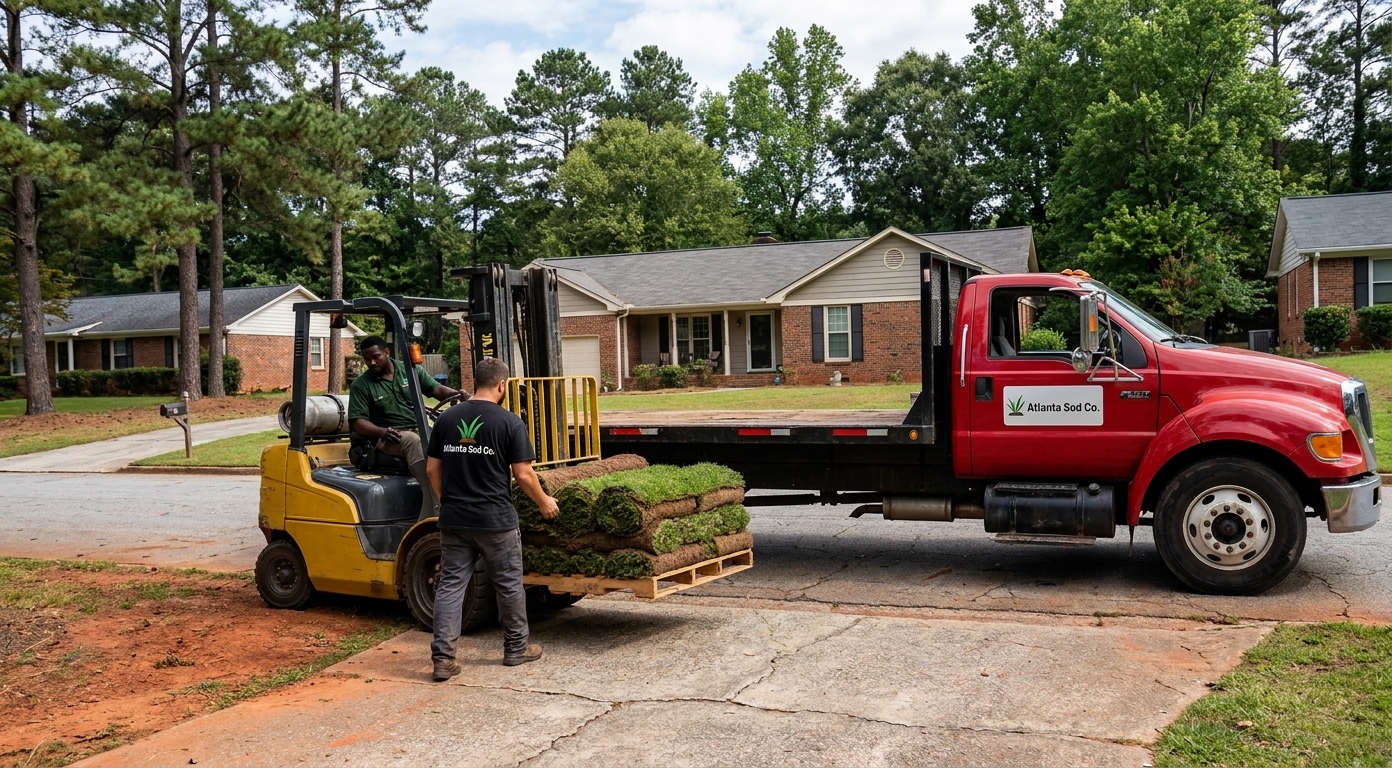
If your property is a standard residential lot, sod is almost always the more practical choice. If you’re working with acreage where the economics genuinely shift, or you just need bulk material for a DIY weekend, our bulk sod delivery service can get fresh-cut pallets to a large property without a full installation crew.
What we’d recommend for your yard
We’ll tell you honestly if seed makes more sense for your specific situation — it occasionally does for larger properties. For the standard Atlanta residential lawn, though, sod’s speed and immediate weed and erosion resistance make it the more reliable investment. Full details on installation are on our sod installation page.